You know, there is something frustrating about fixing something only to discover that you never really fixed the problem. You patch the roof, but the water keeps coming in. You repair the wall, but the crack comes back. You apologize for something you said, promise yourself you'll never say it again, and then six months later you find yourself saying the very same thing. And after a while you begin to wonder, Maybe the problem isn't what keeps happening around me. Maybe the problem is something happening inside me. And that brings us right back to where we left off last Sunday. Because Amos told Israel that the evil God was coming to judge wasn't simply out there among the nations. It was inside the gates. It was inside their own lives. But what do you do when the problem isn't just what you've done? What do you do when the problem is the kind of heart that keeps on doing it?
I mean, think about it. Suppose God forgives every sinful thing you've ever done. Every lie. Every hateful thought. Every act of selfishness. Every failure. Every moment when you knew what was right and deliberately chose what was wrong. Suppose God forgives all of it. That's wonderful news, isn't it? But what about tomorrow? What about the next time somebody makes you angry? The next time you're tempted to lie? The next time pride gets in the way? The next time somebody hurts you and you find yourself holding on to resentment? What good would it do to have yesterday's sins forgiven if nothing ever changed about the heart that keeps producing those sins?
And brothers and sisters, that is a question Israel's history forces us to confront. Think about everything we've been studying these past several weeks. God called Abraham and promised to bless the nations through his descendants. He formed Israel into a people. He delivered them from Egypt. He brought them through the wilderness. He gave them His law. He established them in the land. He raised up kings. He made an everlasting promise to David. And yet, what kept happening? The people kept turning away. God delivered them, and they rebelled. God provided for them, and they complained. God gave them His commandments, and they broke them. God warned them through the prophets, and they refused to listen. And even when they repented, how long was it before they found themselves doing the very same things again? It's almost frustrating to read, isn't it? You want to reach into the pages of the Old Testament, grab Israel by the scruff of their necks, and say, quit it. But then you stop and think about your own life. How many times have you said something you regretted, apologized for it, and promised yourself you'd never do it again? How many times have you lost your temper over something that really wasn't worth losing your temper over? How many times have you prayed, Lord, help me be more patient, only to discover that your patience lasted only until the next ref did something frustrating at your son’s football game. And suddenly you realize, you and Israel are one in the same.
A New Covenant
And here is the problem. Israel didn't lack instructions. God had given them the law. They knew what righteousness looked like. But knowing the law didn't automatically produce a heart that loved the law. And the prophets understood this. Listen to what God says through Jeremiah. Jeremiah 31:31 begins: “Behold, the days are coming, declares the LORD, when I will make a new covenant with the house of Israel and the house of Judah.” Now let's stop right there. Think about how extraordinary that announcement would have sounded. Israel's history had been marked by covenant after covenant, promise after promise, and failure after failure. God had remained faithful, but His people had repeatedly broken faith with Him. And now. God announces that He isn't finished with them. He's going to make a New Covenant. And notice with whom He says He's going to make it: the house of Israel and the house of Judah. God hasn't forgotten Abraham. He hasn't forgotten David. He hasn't abandoned the people He called. But something is going to be different.
Jeremiah continues in verse 32: “Not like the covenant that I made with their fathers on the day when I took them by the hand to bring them out of the land of Egypt, my covenant that they broke...” Let's stop right there also, God acknowledges that Israel had broken covenant. God had taken them by the hand. Like a father taking a child by the hand, God had led Israel out of slavery and into freedom. And they still broke it…But now listen to what God promises in verse 33: “I will put my law within them, and I will write it on their hearts.” Did you hear that? Not simply a law written on tablets of stone. Not merely in a scroll that somebody could read aloud. On their hearts. And this is where their story begins to change. Because God isn't simply promising Israel another opportunity to try harder. He's promising to do something within His people that trying harder was never been able to accomplish. He's going to change them from the inside and out. He is going to give them a new heart…And then in verse 34 comes this promise: “For I will forgive their iniquity, and I will remember their sin no more.”…and if we put those two promises together, God will forgive their sin, and God will write His law upon their hearts. What do we have? Forgiveness and transformation. Justification and Sanctification. Not one without the other…
A New Heart
And as if that weren't enough, God speaks through another prophet, Ezekiel, and makes the promise even clearer. Ezekiel 36:26–27: “And I will give you a new heart, and a new spirit I will put within you. And I will remove the heart of stone from your flesh and give you a heart of flesh. And I will put my Spirit within you, and cause you to walk in my statutes and be careful to obey my rules.” A new heart. Think about that for a moment. God doesn't say, I'm going to give you a few more commandments. He doesn't say, I'm going to send you another prophet to remind you what you're supposed to do. He doesn't even say, I'm going to give you one last chance, and you'd better not mess it up. He says, “I will give you a new heart.” And notice something else. Who is doing all the work in that promise? I will give you. I will remove. I will put my Spirit within you. God is the One acting. And that's important, because the problem with the human heart is not something the human heart can ultimately fix by itself. You can change your habits. You can learn to control your words. You can become more disciplined. You can stop getting 15 yd penalties cause you can’t keep your mouth shut. And those things matter. But you cannot simply command yourself to become a new creation. Only God can give new spirit, a new heart, a new life. And that's what He promises through the prophets to do…
Life Is in the Blood
You know, there is something remarkable about the human heart. Think about what it does. From before you're born until the moment you die, your heart keeps beating. Day and night. Whether you're awake or asleep. Whether you're working, eating, watching television, or sitting here listening to me preach. Even if you are zoned out in a zombie like state listening to me preach. Your heart just keeps doing its job. And what is that job? To keep blood flowing through your body. Now, I'm certainly no cardiologist, but I know enough to understand that blood carries the oxygen our bodies need to survive. Every organ depends upon it. Every muscle depends upon it. The whole body just depends upon the heart to keep pumping—life depends upon the blood. Right?…that is why, It is so fascinating to me that thousands of years ago God in Leviticus 17:11, says, “For the life of the flesh is in the blood.”… In other words, blood is a sacred thing, because blood is life. And this is why blood played such an important role in the sacrifices He had commanded. Blood represented life. And so because sin brings death, God had given Israel a sacrificial system in which blood was associated with atonement or the canceling of sin. So sin equals death, but the blood of atonement for sin equals life…
Now, I want you to hold on to that thought for a moment. Life being in the blood. Because there is a relationship between life, blood, and the human heart that God through the prophets is promising. You see, in the physical body, the heart keeps blood circulating, carrying what the body needs to live. Without that flow of blood, the body dies. But the prophets are describing a different kind of problem. A person can have a perfectly healthy physical heart and still have a heart that is spiritually dead. A heart filled with pride. A heart hardened by bitterness. A heart consumed by jealousy. A heart that refuses to forgive. A heart that knows God's commandments but doesn't want to obey them. And no amount of physical blood circulating through that heart is going to solve that problem. What Israel needed wasn't a better circulation system. They needed a new heart—a new spiritual heart. And so do we.
The Blood of the Covenant
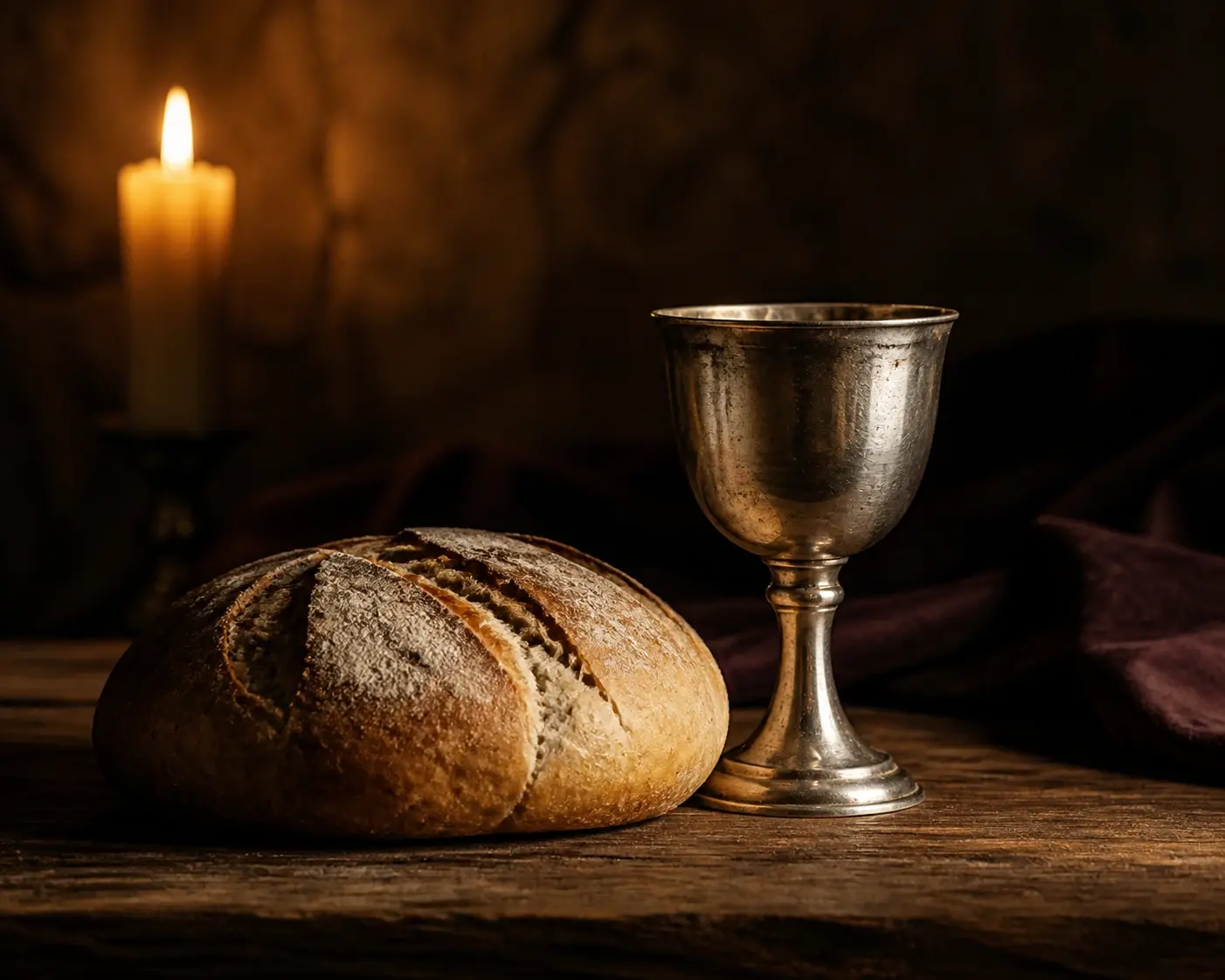
But here's the question. If God has promised to forgive to cancel sin and give His people a new heart, how is He going to accomplish it? How is He going to deal with the guilt of the past and the corruption that remains within?…And then the answer comes…at a small passover meal in the early part of the 1st century AD, is a man with 12 of His followers, sharing what will be a final time together before the man is arrested and later crucified. Matthew 26 takes us there. And he tells us that the man named Jesus (who happens to be the Messiah that Israel had been waiting for) takes some bread, blesses it, breaks it, and gives it to His disciples. And says, “Take, eat; this is my body.” Then He takes a cup, gives thanks, and tells them to drink from it. And listen carefully to what He says in Matthew 26:28: “For this is my blood of the covenant, which is poured out for many for the forgiveness of sins.”
Now think about everything we've heard this morning. God said through Jeremiah, I will make a New Covenant. God said, I will forgive their iniquity. God said, I will write my law upon their hearts. God said through Ezekiel, I will give you a new heart. And now Jesus takes the cup and says, “This is my blood of the covenant... poured out for many for the forgiveness of sins.” Do you see what's happening? The promise God made through the prophets is finding its foundation in the blood of Jesus Christ. And that brings us back to Leviticus. “The life of the flesh is in the blood.”For generations, Israel had offered sacrifices in which blood represented life given in connection with atonement. But now Jesus isn't pointing to the blood of another sacrifice. He's pointing to His own. He's telling His disciples that His life is about to be given. And through His death, the forgiveness promised in the New Covenant will be secured—Through the blood of Jesus, the New Covenant is established. We are forgiven. And through the Holy Spirit, the new life promised in that covenant begins transforming us from within. Forgiveness/transformation, justification/sanctification.
The blood of Christ is the foundation of our forgiveness and reconciliation with God. And the Spirit of Christ is the One who brings new life to our hearts. Do you see how those two things belong together? The blood secures the covenant. The Spirit transforms the heart. And that means Jesus didn't simply come to erase the record of our past sins. He came so that we could be reconciled to God and begin living a new life. A life shaped by the Spirit of God. A life in which our desires begin to change. A life in which things that once seemed perfectly acceptable begin to trouble our conscience. A life in which we begin learning to forgive people we once hated. A life in which pride begins giving way to humility. A life in which selfishness begins giving way to love. Not because we have suddenly become perfect. Not because every temptation disappears. And certainly not because we no longer have to struggle against sin. But because God is doing something inside us that we could never accomplish on our own. He has given us a new heart that beats with His eternal blood of forgiveness…which means life eternal in the righteous presence of God. Blood equals life, and Christ’s blood equals life eternal.
And brothers and sisters, this is where I think the image of the heart becomes especially powerful. Think again about your physical heart. That blood doesn't simply remain in the heart, does it? It moves. It circulates. It reaches every part of the body. The heart isn't doing its job if the blood never goes anywhere. And in a similar way, the new life God gives us is not meant to remain some private religious experience that never touches the rest of our lives. It's supposed to change the way we live. It should reach our marriages. Our families. Our friendships. Our conversations. Our decisions. The way we treat people who disagree with us. The way we respond when we're wronged. The way we conduct ourselves when nobody else is watching. Because if we claim that God has given us a new heart, shouldn't there be some evidence of that new heart? And isn't that exactly what John the Baptist was talking about last Sunday? “Bear fruit in keeping with repentance.” Not earn your salvation by producing enough fruit. But if you've truly turned toward God, if His Spirit is at work within you, His blood is at work forgiving you, then sooner or later, you will see transformed life…because your new heart has begun beating for the first time.
The Heart of the Matter
So think about how far we've come. We began with Abraham and the promise that God would bless the nations. We watched Israel struggle to remain faithful. We saw the kingdom divided. We heard the prophets warn that the Day of the Lord was coming. And last Sunday we asked, Who can stand when God finally says enough to sin? The answer was those who take refuge in Jesus Christ. But today we've discovered that God intends to do even more than rescue sinners from judgment. He intends to change the hearts of the people He saves. And that brings us back to where we began. Your heart is beating right now. You probably haven't thought about it for the last several minutes, but it's been doing its job the entire time. Keeping the blood moving. Keeping life flowing. And that blood is reaching places inside your body you can't even see. But let me ask you something. What is flowing out of your spiritual heart? Is it love? Is it mercy? Is it forgiveness? Is it patience? Or is it bitterness? Pride? Anger? Resentment? Because Jesus said that what comes out of our lives reveals something about what's happening inside our hearts. And maybe the question we need to ask this morning isn't simply, Lord, will You forgive me? Maybe it's also, Lord, will You change me? Will You take this stubborn heart? This proud heart? This wounded heart? This heart that keeps returning to the same old sins? And will You make it new? And brothers and sisters, here’s the wonderful news. That's exactly what God has promised to do. And so Jesus didn't give His life merely so that we could be forgiven and remain exactly as we were. He gave His life so that we might receive new life. And that's the heart of the matter. God doesn't just want to forgive what comes out of your heart. He wants to change what lives with it. And that is the heart of the matter. Glory be to the Lord our God, Jesus the Christ. Amen.
