Who Was Dorcas (Tabitha)?
Dorcas, also known by her Aramaic name Tabitha, was a disciple of Jesus Christ living in the first-century city of Joppa. She is described as a woman "full of good works and almsdeeds which she did" (Acts 9:36). Though not a church leader or missionary, her life was defined by compassionate service to the poor and vulnerable, particularly widows.
Where Dorcas (Tabitha) Appears in the Bible
Dorcas appears exclusively in the Book of Acts, chapter 9, verses 36–43. Her story is nestled between the conversion of Saul of Tarsus (Acts 9:1–31) and Peter's vision of unclean animals (Acts 10). She lived in Joppa, a port city on the Mediterranean coast, and was part of the early Christian community there.
Dorcas (Tabitha)'s Defining Moment
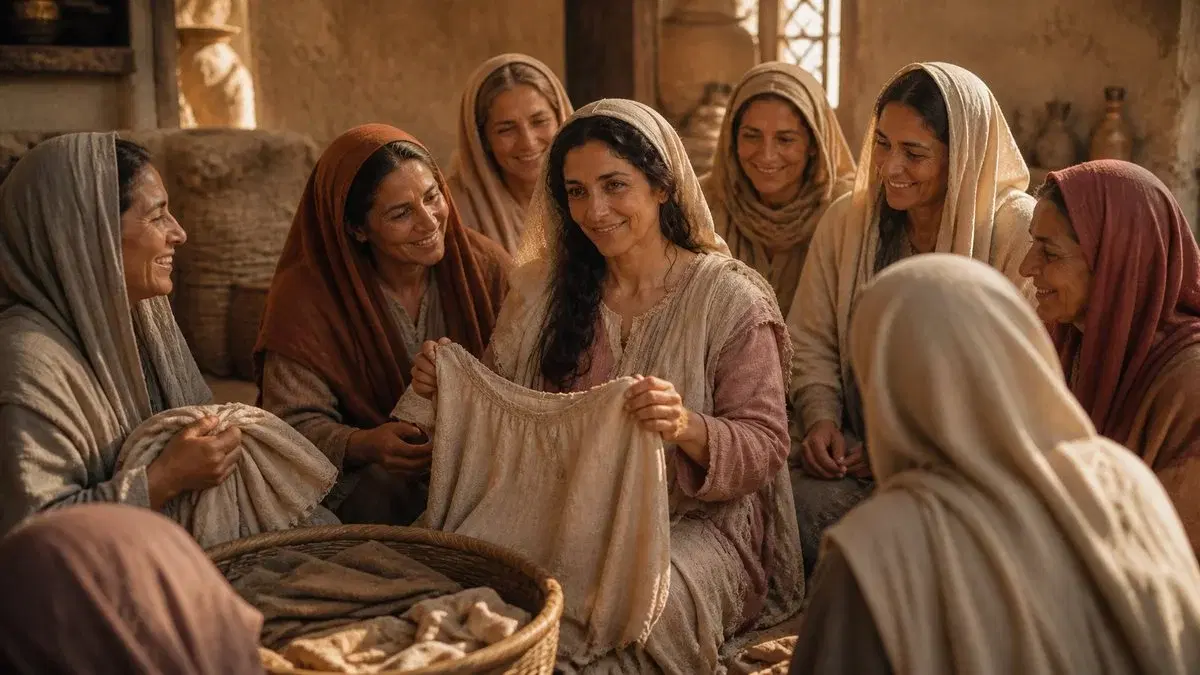
Dorcas fell ill and died. Her body was washed and laid in an upper room. The disciples in Joppa, knowing Peter was nearby in Lydda, sent two men to urge him, "Delay not to come on unto us" (Acts 9:38). Peter came, and when he arrived, he was taken to the upper room where widows stood around him, weeping. They showed him the "coats and garments which Dorcas made" while she was with them (Acts 9:39). Moved by their grief, Peter sent them all out, knelt down, and prayed. Then, turning to the body, he said, "Tabitha, arise" (Acts 9:40). She opened her eyes, and when she saw Peter, she sat up. He gave her his hand, raised her, and presented her alive to the saints and widows. The news spread throughout Joppa, and "many believed in the Lord" (Acts 9:42).
Why Dorcas (Tabitha) Matters
Dorcas is remembered as a model of practical, hands-on service. She used her gift of sewing to clothe the needy, meeting a tangible need in her community. Her resurrection was not just a personal miracle; it became a catalyst for the gospel, drawing many to faith in Christ. Her story highlights the value of every act of kindness, no matter how ordinary, and demonstrates that God honors those who serve the vulnerable. The widows' tearful display of her handiwork shows the deep impact of her love, and her restored life became a testimony to the power of God working through his people.
For further study, read the full account in Acts 9:36–43.
