Who Was Joshua?
Joshua was the leader God chose to succeed Moses and carry Israel into the Promised Land. He was born in Egypt as the son of Nun, of the tribe of Ephraim, and was first named Oshea — until Moses renamed him Jehoshua, which means "the Lord saves" (Numbers 13:16). Before he ever led a nation, Joshua spent years at Moses' side as his attendant and aide, learning to trust and obey the God who was about to hand him an enormous task.
Where Joshua Appears in the Bible
Joshua's story runs through four books of the Bible. He first appears in Exodus, leading Israel's fighters against the Amalekites while Moses held up his hands in prayer (Exodus 17:8-13), and later going partway up Mount Sinai with Moses (Exodus 24:13). In Numbers he is sent as one of twelve spies into Canaan and is one of only two — along with Caleb — who return trusting God to give them the land (Numbers 13-14). Deuteronomy records Moses laying hands on him and commissioning him as the new leader (Deuteronomy 31; 34). The book of Joshua tells the rest: the crossing of the Jordan, the fall of Jericho, and the settlement of the land (Joshua 1-24).
Joshua's Defining Moment
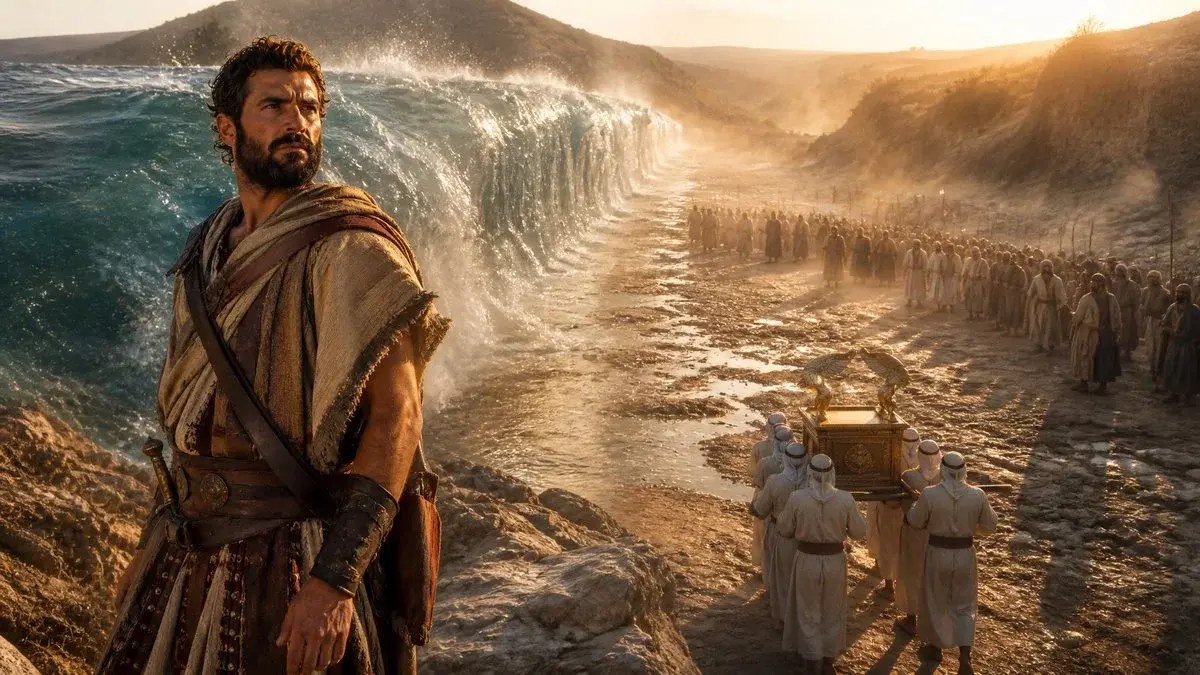
Joshua's defining moment came at the Jordan River, swollen at flood stage, with the Promised Land on the far side. God told him the priests were to step into the water first, carrying the ark of the covenant — and only then would the waters part. Joshua obeyed, and the Bible says the waters that flowed down stood up in a heap, so that all Israel crossed over on dry ground (Joshua 3:14-17). From there he led the march around Jericho, where the walls fell after seven days of faithful obedience (Joshua 6). Near the end of his life, at Shechem, he issued the challenge he is best remembered for: "choose you this day whom ye will serve... but as for me and my house, we will serve the LORD" (Joshua 24:15).
Why Joshua Matters
Joshua matters because he is the leader who finished what Moses began — bringing the people into the land God had promised Abraham centuries earlier. Scripture presents him as a picture of courage rooted in obedience, the man who heard God say, "Be strong and of a good courage; be not afraid, neither be thou dismayed: for the LORD thy God is with thee whithersoever thou goest" (), and then lived it out. His name, "the Lord saves," points forward to Jesus, whose name means the same thing. And his closing call at Shechem — to choose whom to serve — still echoes whenever God's people are asked to make that same decision.
